
PROOF IN THE PASTURE Demo Day 2026 Recap
JUMP TO RESULTS FROM:
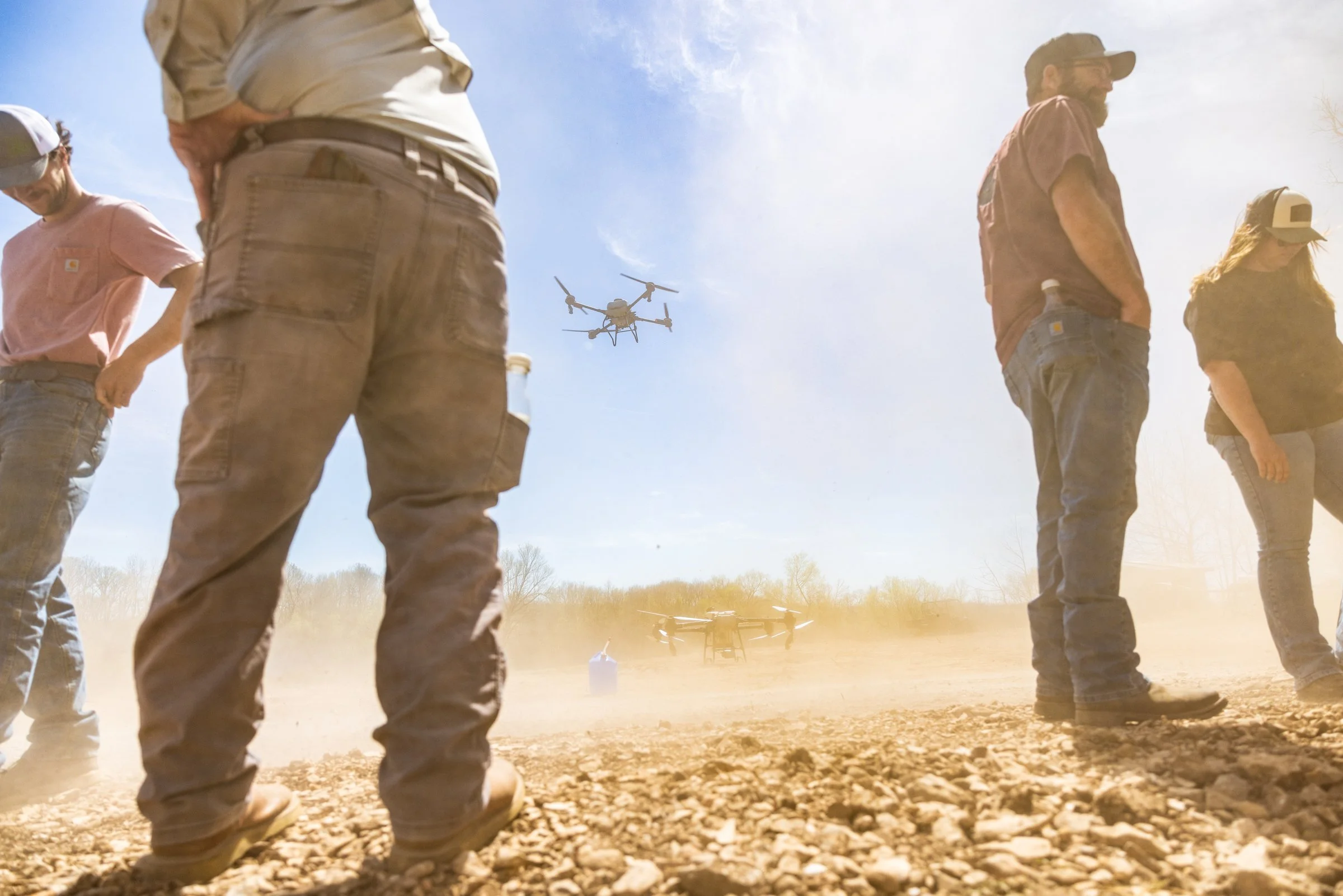
An unbiased look at Missouri Pasture land testing with mid-size ag drones
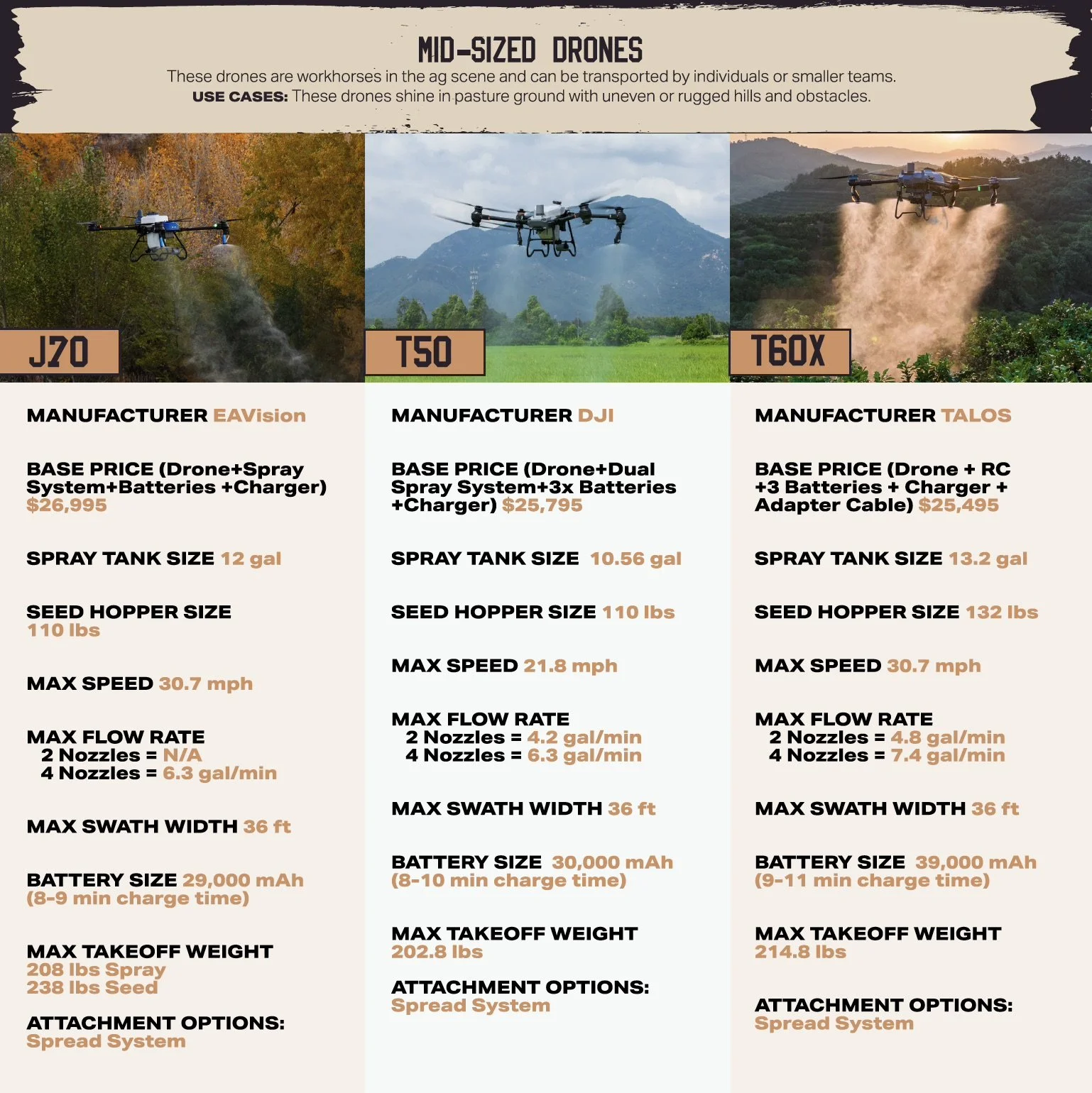
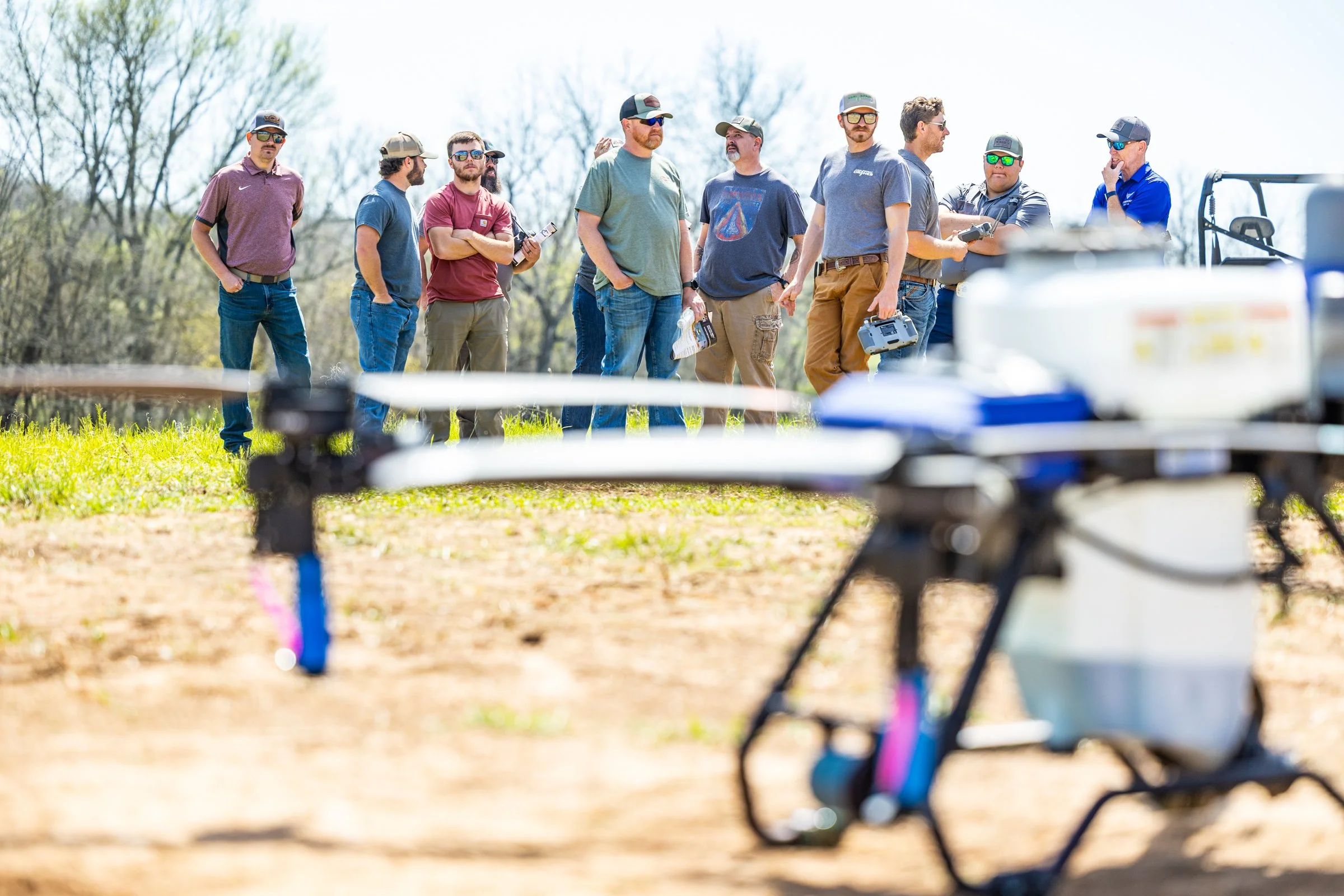
On April 8th, 2026 our team here in Republic, MO at Monarch Drone Solutions hosted a demo day where we put to test three well known mid-size workhorse drones—Proof in the Pasture Demo Day—bringing together pilots, growers, ag tech partners, and drone enthusiasts. The drones in the lineup this time were in the 10 to 13 gallon sized payload category which makes them ideal for maneuvering the landscape of pastureland in Southern Missouri–the EAVision J70, DJI T50, and the Talos T60X. Easier to manhandle and move, but is it easy to handle the pastureland and obstacles of Southern Missouri?
Our goal?
Present an accurate picture of the current mid-size drone landscape and see how these autonomous spraying and mapping platforms perform side-by-side in real-world field conditions. We will be specifically highlighting:
Total Flight Time: How long does it take to fully complete a common Southern Missouri field size of 5.7 acres?
Manual Flight Performance: How does the drone trim out fields, hills and hollers or trees, power lines and…old barns? Honestly can’t think of something that rhymes for this, but you get what we are saying.
Efficiency: How does the battery and payload stack up on long ferrying times and constant field maneuvering?
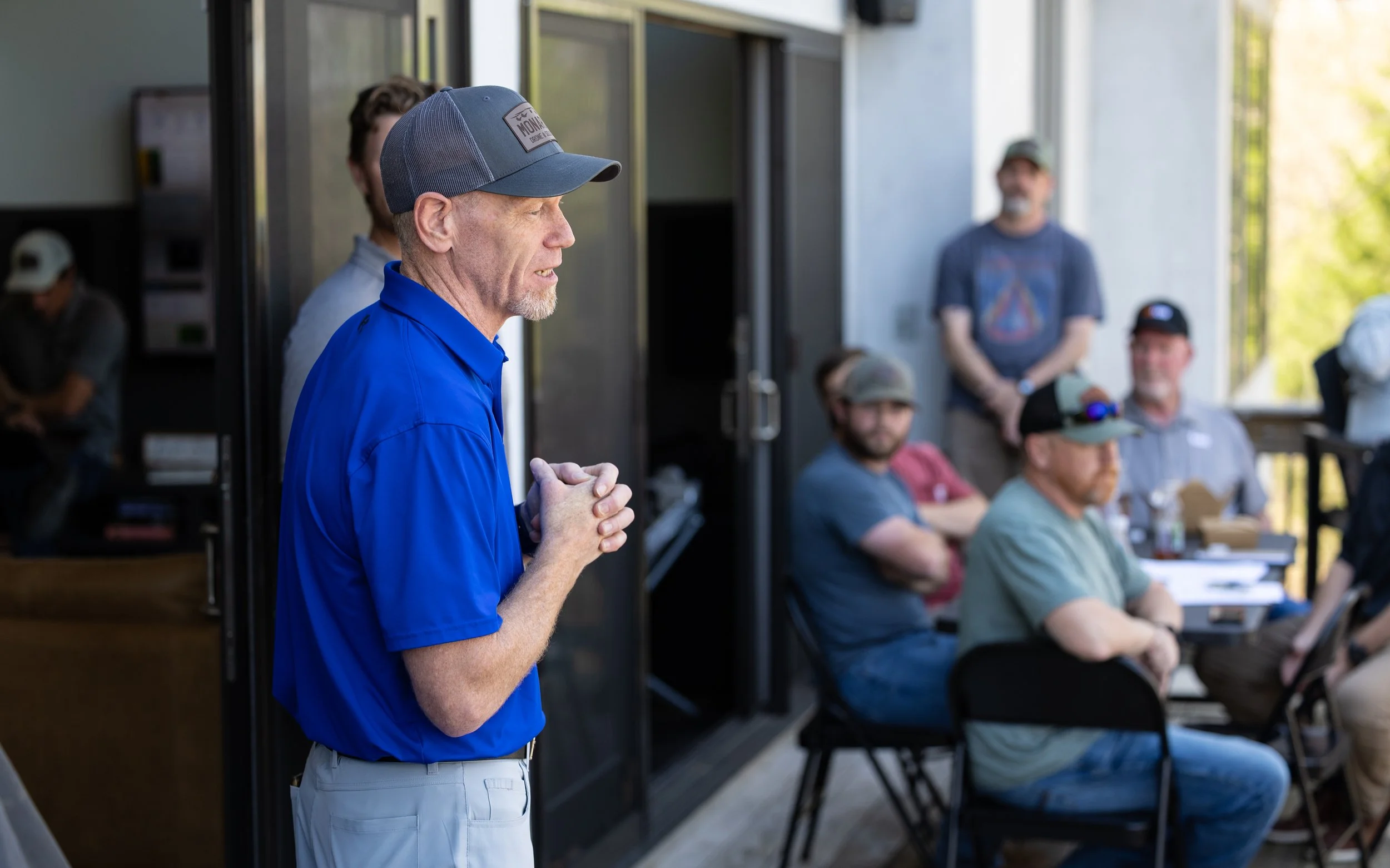
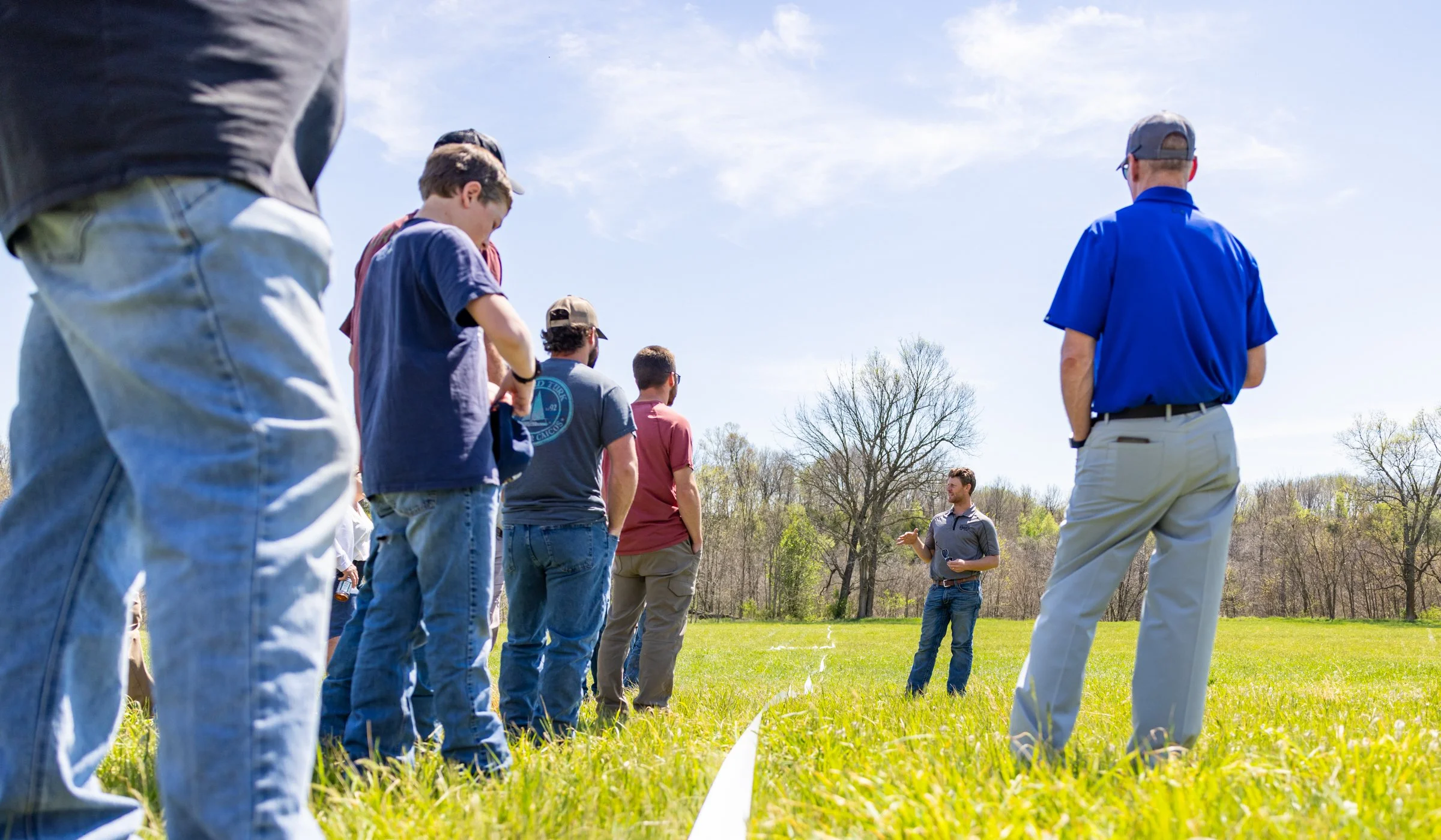
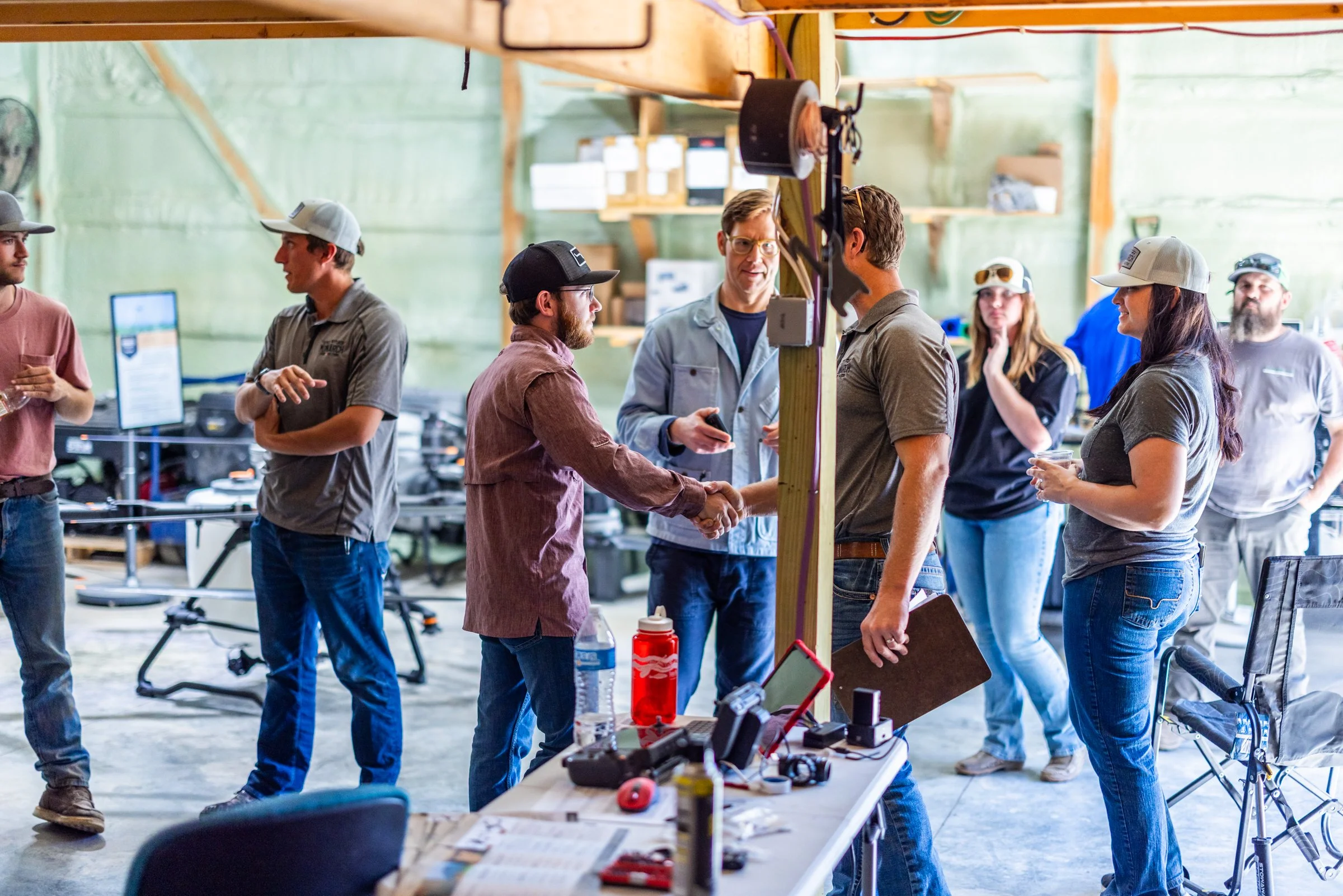
Gabe Hicks with VT Insurance, welcoming the group over lunch. He flew up from Texas to be with us and our customers. Now, that’s the level of dedication you want from your insurance agent! A HUGE thank you goes out to Gabe for making the trip and for Vaughn and Heather at VT Insurance for being our lunch sponsors for the day!
Setting the Stage
The temps and sunshine were much appreciated, but the wind could’ve taken a hike. Regardless, we got a lot of answers we were seeking…and learned a little about tacking down receipt paper. (more on that below).
This was a special one. So far, we have heavily focused on large capacity drone demos–and what did we learn? Large drones may be too large for 80% of the projects here in Southern Missouri. So, we thought we would give our backs a break from lifting the big dogs and test out the mid-size workhorses. Better yet, we got to do it right at our home base in Republic, Missouri.
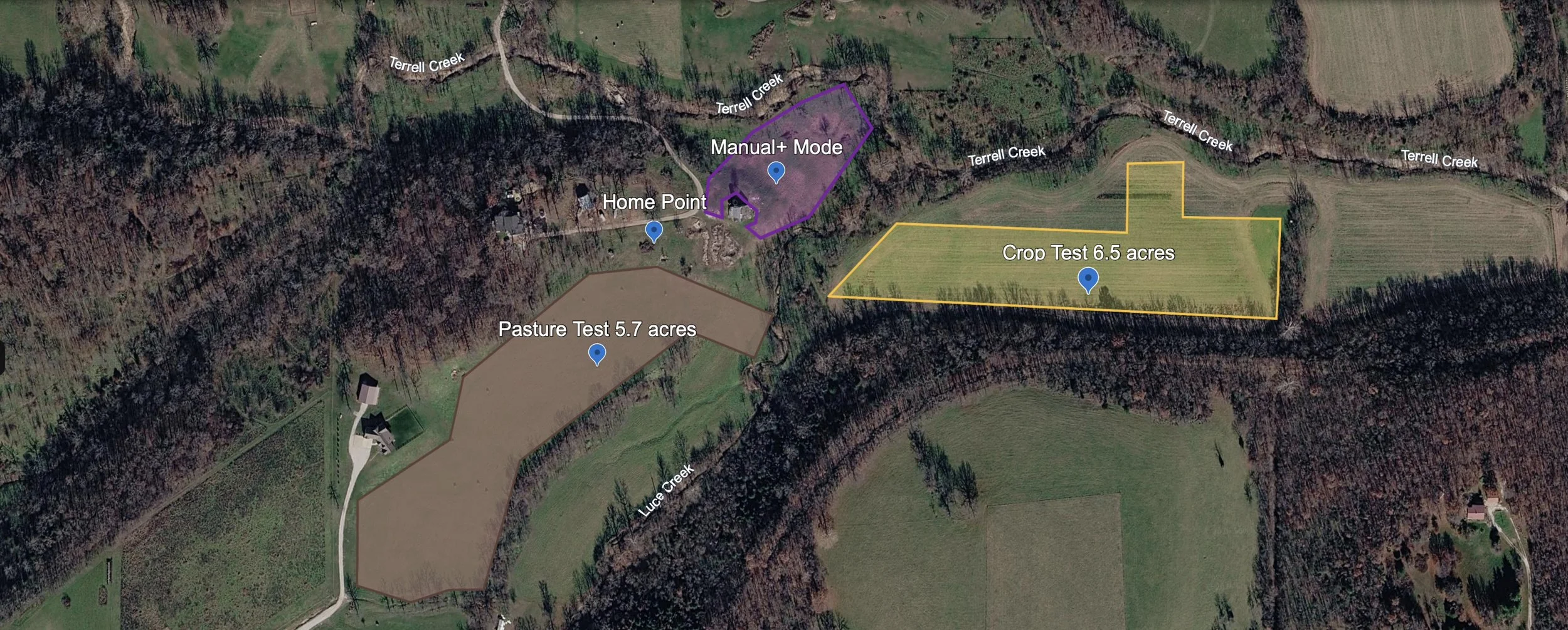
To do this, we tested three drones across three different test fields.
COMPARING THE SYSTEM–USER FRIENDLINESS
(FIELD 1) Mapping the Fields Videos (Left to right: T50, T60X, J70)
T50 Mapping Fields 1, 2, & 3
T60x Mapping Fields 1, 2, & 3
J70 Mapping Field 2
THE THREE DRONES
Diving into the equipment. These drones are similar in a lot of ways, especially when it comes to payload size. However, the results varied vastly at the end of the day.
Let’s take a moment to chat about the drones we chose to compare.
The T50 has a lot of seasons and acres under its belt. In that time, it’s built a reputation for its reliability and what could be the last mid-sized drone in the DJI ecosystem in the United States.
While the T60X hasn’t been around as long as its cousin, the T50 (if you know, you know), it is proving to be a huge efficiency gain over previous mid-sized models, with many familiar components and software for DJI users.
The J70 appears to be a condensed version of the J150, with beefed up hardware–leaving the J100 as a distant memory. AgriSpray, a leading distributor known for their farmer first and tech second approach have really pushed EA Vision to create hardware and software that puts the applicator and farmer first.
FIELD 1
Field #1 – Pasture Performance
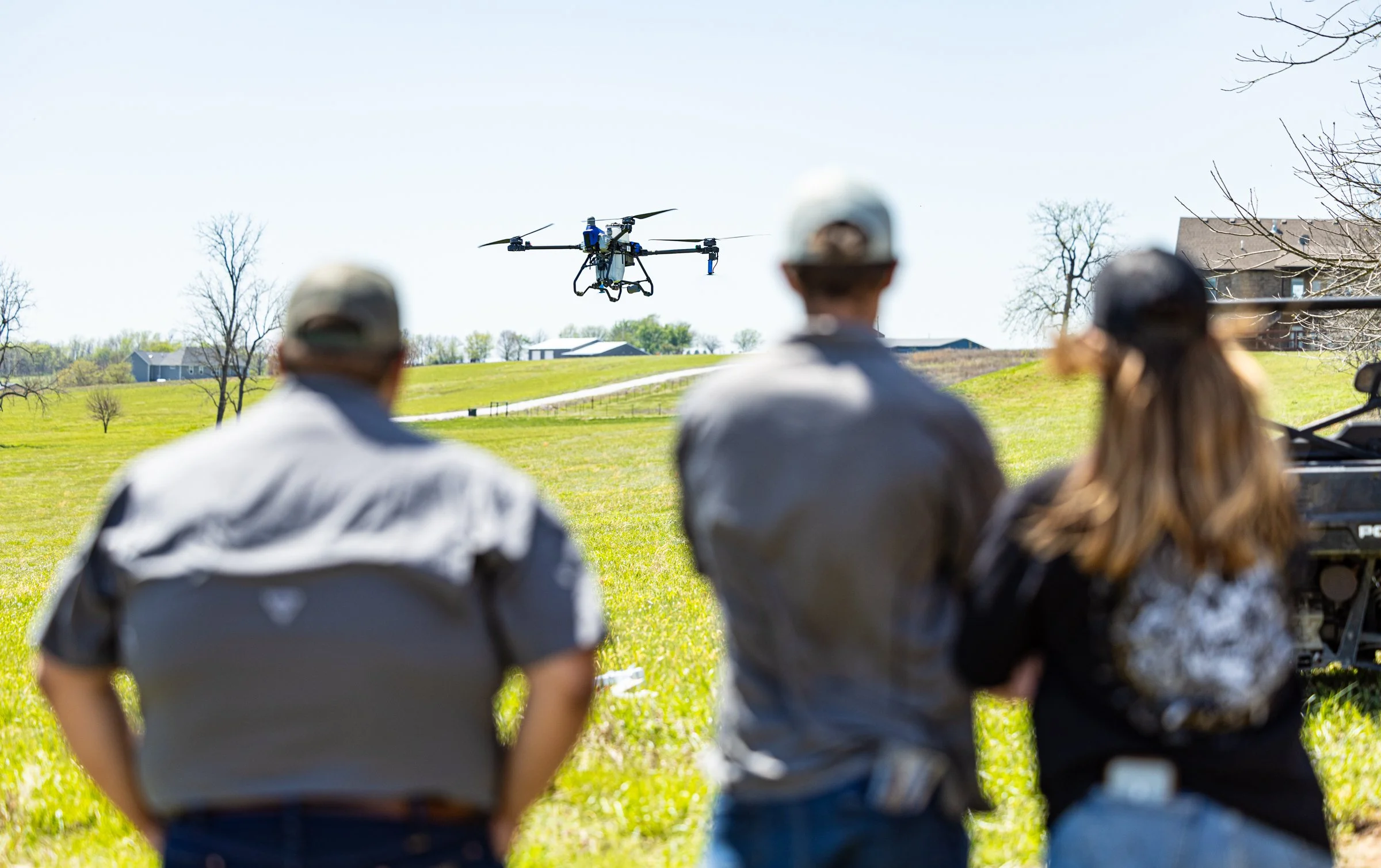
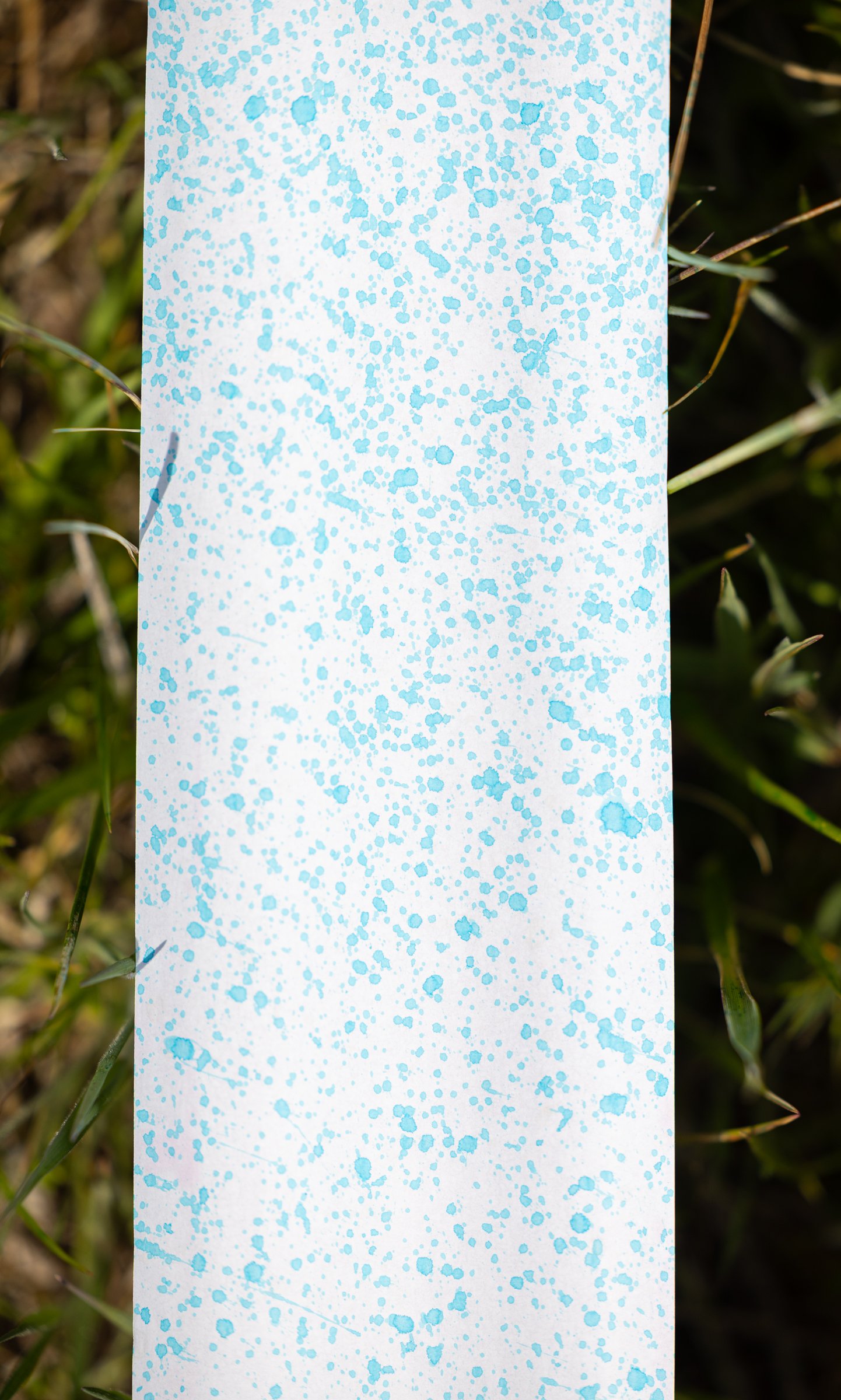
We kicked off the Demo Day in a 5.7-acre pasture field, designed to simulate a real-world herbicide-style application in a small yet relative sized field for what we spray around here. Sometimes these sized fields are a pain but our job is to figure out how to run them as efficiently as possible. One big thing we wanted to see in this was how quickly and efficiently each could complete the field using total time of all flights. Another thing we were looking for was coverage and drift using a little old fashioned blue dye and receipt paper. Let’s dive in to the first field data.
Standardized Flight Parameters
To keep things consistent across platforms and get some unbiased results, all aircraft were run under the same settings:
Altitude: 10 ft
Speed: 28 ft/sec
Swath: 26 ft
Rate: 2.5 GPA
Droplet Size: 500 micron
Mix: Water, a fertilizer product, surfactant, an anti-drift agent, & blue dye to test coverage, droplet size and drift.
(FIELD 1) Run 1 Videos (Left to right: T50, T60X, J70)
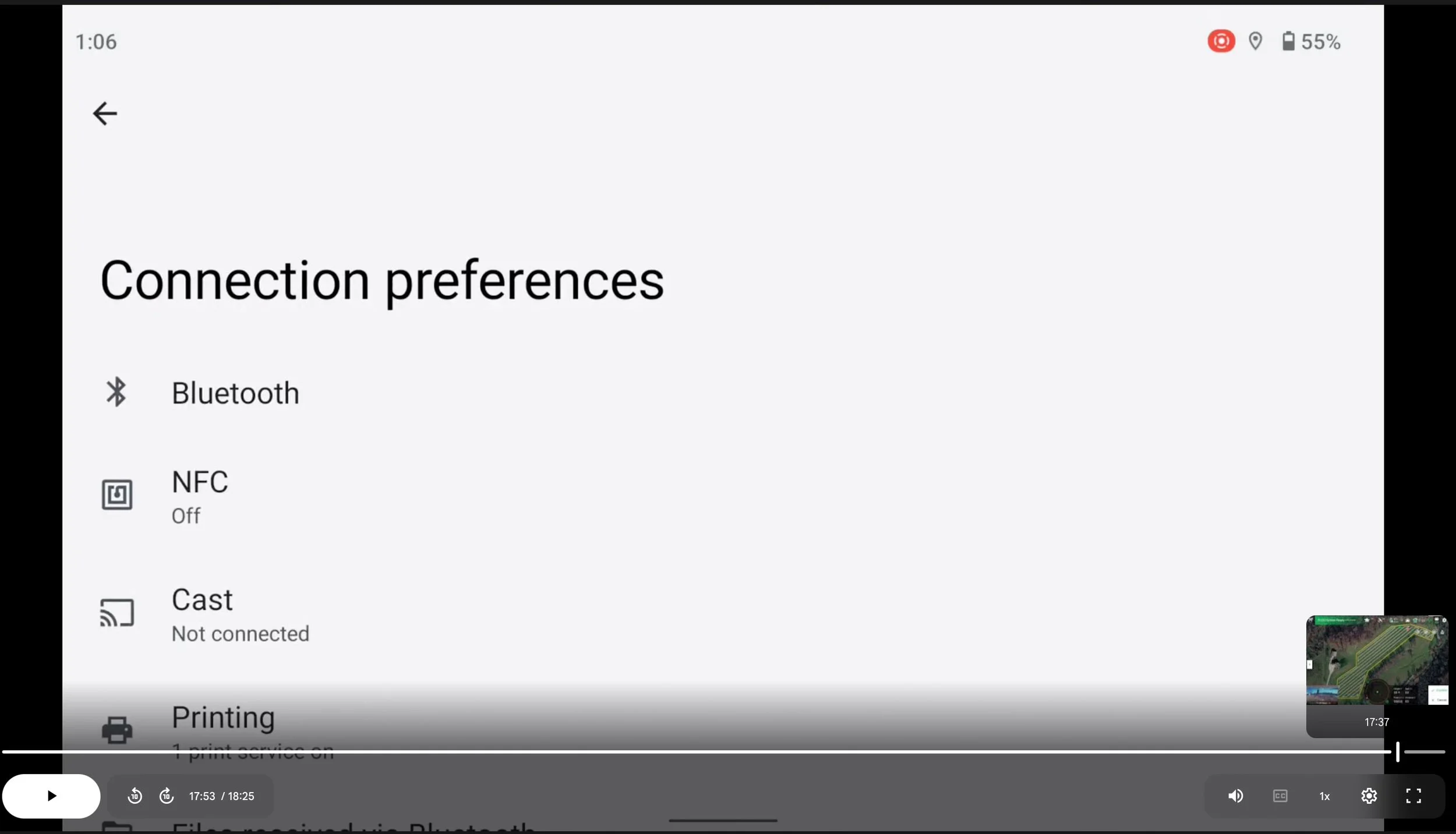
Word to the wise! We learned the hard way…you cannot cast to a screen live while recording. WOMP WOMP. Reference Run two below.
(FIELD 1) Run 2 Videos (Left to right: T50, T60X, J70)
Metric 1 Acres Covered: Efficiency
This is where things started to separate. Remember, the mapped field size was approximately 5.7 acres, oddly shaped with sloping terrain.
Total acres covered on first run:
T50: 4.2 acres
T60X: 4.99 acres
J70: 2.89 acres
Total acres covered on second run:
T50: 1.21 acres
T60X: .68 acres
J70: 3.03 acres
Total acres covered combined:
T50: 5.41 acres
T60X: 5.67 acres
J70: 5.92 acres
Metric 2 Flight Time: Productivity
Total flight time on first run:
T50: 5 minutes 57 seconds
T60X: 6 minutes 30 seconds
J70: 6 minutes 58 seconds
Total flight time on second run:
T50: 2 minutes 11 seconds
T60X: 2 minutes 27 seconds
J70: 5 minutes 26 seconds
Total FLIGHT TIME TO COMPLETE TASK combined:
T50: 8 minutes 8 seconds
T60X: 8 minutes 57 seconds
J70: 12 minutes 24 seconds
Metric 3 Battery Performance: Real-World Drain
Battery Charge Percentage at Start → End
T50
Run 1 100% → 17%
Run 2 100% → 13%
T60
Run 1 98% → 13%
Run 2 100% → 65%
J70
Run 1 97% → 13%
Run 2 100% → 14%
Metric 4 Payload Usage: What WAS Actually SPRAYED
Total payload at start → end on each run:
T50:
Run 1 10.3 gal → 0 gal
Run 2 3.6 gal → 0.9 gal
T60X:
Run 1 13.2 gal → .6 gal
Run 2 3.1 gal → 1.5 gal
J70:
Run 1 12.5 gal → 4.5 gal
Run 2 9 gal → 2 gal
Metric 5 Coverage & Pattern Quality
IMPORTANT NOTES:
While the weather held up for us, it did give us a real-world test environment for performance through changing wind gusts. (yay). That said, the wind influence was visible across all platforms which is why it is so important to monitor your swath.
This is pasture testing—not a controlled environment. These results matter more because of that.
T50
Strong overall coverage with slight variation (5% larger droplets)
T60
The widest droplet variation, including some larger-than-expected droplets
J70
The most consistent droplet size and pattern
Takeaway:
👉 J70 takes the win here on pattern consistency. Will dive into nozzle configurations in the future.
That said—this was also a wind-affected test, and it reinforced a major field truth:
👉 Crosswind is your friend
👉 Headwinds and tailwinds can create streaking and uneven coverage fast
Metric 6 Signal & Connectivity
T50: strong, stable connection throughout
T60X: strong, stable connection throughout
J70: While the J70 has improved from previous models (and the non-fisheye lens helps significantly), the delay is still noticeable in operation. J70 is improving, but still behind in real-time responsiveness.
👉 This is critical for operators running longer distances, complex terrain or manual flight.
Metric 7 Return-to-Home (RTH) Behavior
T50: 32 FTPS return using fixed altitude and direct pathing.
T60X: 45 FTPS faster return using fixed altitude and direct pathing..
J70: best-in-class terrain-following RTH, adding a major layer of safety.
👉 RTH matters more than people think—this is lost or gained time every cycle.
Also worth noting:
The T60X & J70 both running 45 ft/sec RTH speeds is a real efficiency gain over the T50 maxing out at 32 ft/sec.
Metric 8 Flight Characteristics (Real Terrain Performance)
T60X: Strongest slope handling and altitude consistency.
T50: Very capable, but slows more aggressively on steep terrain.
J70: Solid Terrain following but less efficient overall execution.
👉 This is where drones earn their keep—real hills, slopes and awkward runs, not solely flat test plots.
Final Thoughts: Field #1
This pasture field did exactly what we hoped—it exposed how each drone thinks, not just how fast it flies.
Metric 1: Acres Covered (Efficiency)
On the first run alone, the T60X came out swinging, covering the most acres and showing strong power-to-payload capability right out of the gate.
But here’s where the story changes.
When we zoom out and look at total field completion, the T50 takes the edge—and not because of speed or tank size.
👉 It won on decision-making.
The T50 adjusted its course angle on the awkward ends of the field, reducing inefficient passes and setting itself up for a cleaner second run.
Meanwhile, the T60X left itself with two disconnected sections at opposite ends of the field, which cost time on the second flight.
Bottom line:
T60X = strongest first pass
T50 = smartest full-field execution
Metric 2: Flight Time (Productivity)
If productivity is defined by total time to finish the field, the T50 was the fastest to completion.
Even with:
a smaller tank
slower ferry speed
…it still beat the others by simply flying a more efficient mission.
👉 This is a big takeaway:
Efficiency in path planning can outweigh raw speed and size in irregular pasture fields.
Metric 3: Battery Performance (Real-World Drain)
The T60X stands out here.
With one of the largest batteries in its class, it handled:
heavier payload
longer runtime
strong first-pass acreage
…without falling off in performance.
The T50 and J70 feel comparable in expected battery behavior, but the J70 likely gave up efficiency due to:
slightly heavier payload
more cautious flight behavior
longer time spent “thinking” through route decisions (Taylor Moreland shared that AgriSpray is fixing this and quicker take off)
👉 Battery winner: T60X
👉 Most efficient use of battery in-field: T50
Metric 4: Payload Usage (What Was Actually Sprayed)
This test told a very real-world story.
Run 1 leftovers = battery limitation and tank size
Run 2 leftovers = slight overfill before takeoff
No tricks here—just normal operational realities.
The key takeaway:
👉 None of these drones failed to use payload efficiently
👉 The differences came from how long they could stay in the field
METRIC 5: COVERAGE & PATTERN QUALITY
This is where things got interesting.
J70 → most consistent droplet size and pattern
T50 → strong overall coverage with slight variation (~5% larger droplets)
T60X → widest droplet variation, including some larger-than-expected droplets
👉 J70 takes the win here on pattern consistency
That said—this was also a wind-affected test, and it reinforced a major field truth:
👉 Crosswind is your friend
👉 Headwinds and tailwinds can create streaking and uneven coverage fast
Metric 6: Signal & Connectivity
T50 & T60X → strong, stable connection throughout
J70 → consistent latency and lag on the controller
While the J70 has improved from previous models (and the non-fisheye lens helps significantly), the delay is still noticeable in operation.
👉 Takeaway:
J70 is improving, but still behind in real-time responsiveness.
Metric 7: Return-to-Home (RTH) Behavior
This one depends on what you value most.
T50 & T60X → faster return using fixed altitude and direct pathing
J70 → best-in-class terrain-following RTH, adding a major layer of safety
Also worth noting:
T60X & J70 both running ~45 ft/sec RTH speeds is a real efficiency gain
👉 Speed & efficiency: T50 / T60X
👉 Safety & terrain awareness: J70
Metric 8: Flight Characteristics (Real Terrain Performance)
In real Southern Missouri terrain—hills, slopes, awkward runs:
T60X – strongest slope handling and altitude consistency
T50 – very capable, but slows more aggressively on steep terrain
J70 – solid terrain following, but less efficient overall execution
👉 T60X handled terrain best under load
Big Picture: Field #1
This wasn’t about which drone “wins.”
It was about how they win.
T50 wins with intelligence and efficiency
T60X wins with power and capability
J70 wins in spray consistency and safety features
And when you scale this across a season:
👉 Efficiency = finishing early
👉 Inefficiency = chasing daylight
FIELD 2
Field #2 – CROP Performance
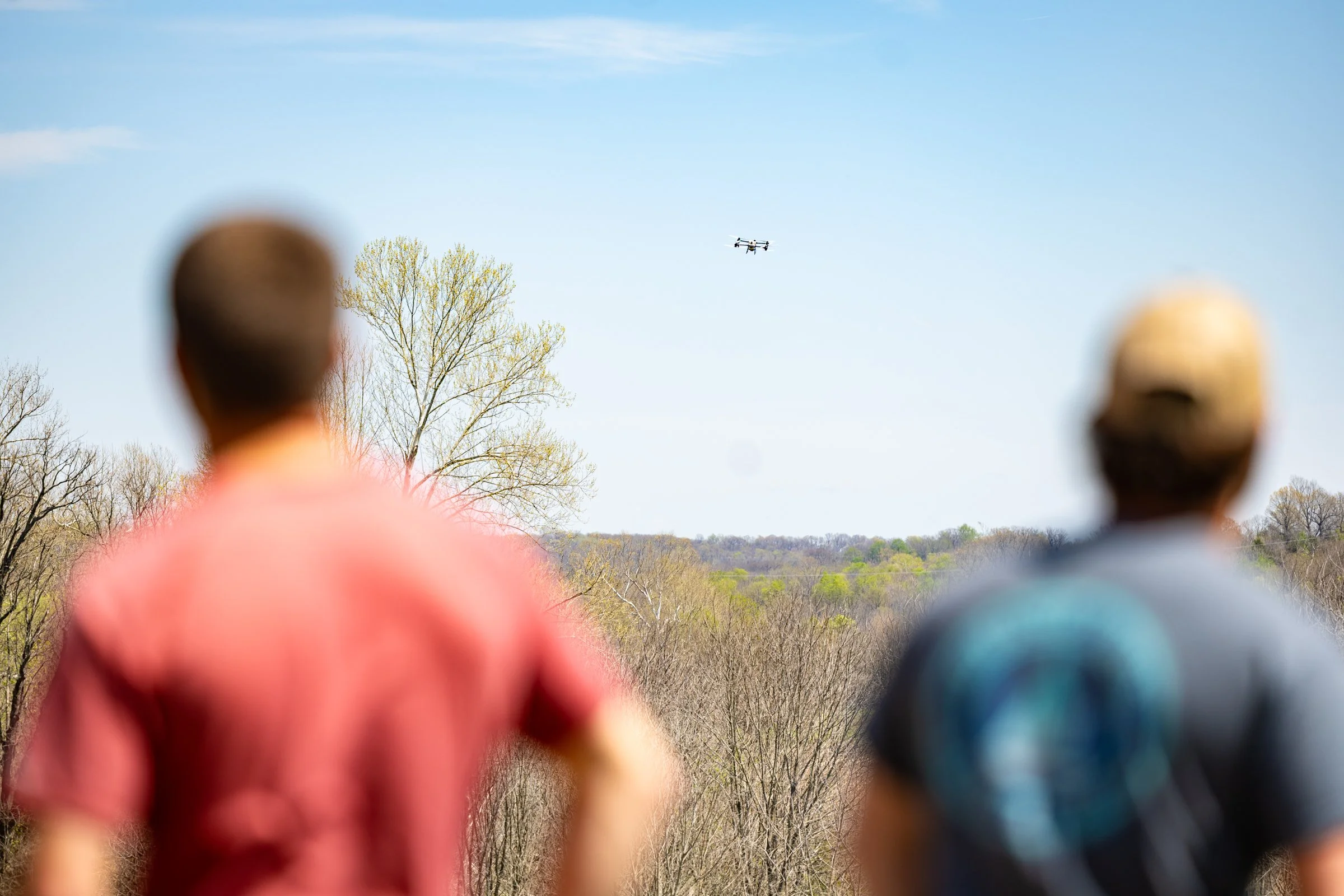
Pushing Speed, Distance, and Efficiency
Field #2 gave us a different kind of test. Where Field #1 was about controlled pasture performance, this field pushed speed, ferry distance, and efficiency under longer runs.
This is much closer to what operators experience when covering larger, more spread-out acres.
Standardized Flight Parameters
To simulate a longer fungicide-style run with more ferry time:
Altitude: 12 ft
Speed: Max speed (wind dependent)
Swath: 30 ft
Rate: 2 GPA
Droplet Size: 300 micron
Mix: Water only
(FIELD 2) Crop Field Videos (Left to right: T50, T60X, J70)
Where’s the sad music? It happened again on this drone! Good news: we DID get Manual+ flight below in field 3!
METRIC 1 Acres Covered: Throughput Under Pressure
T50: 5.31 acres
T60X: 6.22 acres
J70: 4.85 acres
Takeaway:
T60 separated itself clearly in this field
T50 remained competitive, especially considering speed and control
J70 improved vs Field #1, but still trailed in total output
👉 When you stretch distance and increase speed, efficiency gaps widen fast
METRIC 2 Flight Time: Speed Matters
T50: 4 minutes 58 seconds
T60X: 5 minutes 0 seconds
J70: 6 minutes 32 seconds
Takeaway:
T50 was fastest overall cycle
T60 delivered the best balance of speed + acres covered
J70 required more time for less ground
👉 This is where profitability shows up—acres per minute, not just acres per load
METRIC 3 Battery Performance: Drain vs Output
Battery Charge Percentage and temperature at Start → End
T50
Percentage 99% → 25%
Temperature 100.8° → 110.5°
T60X
Percentage 97% → 20%
Temperature 81.1° → 111°
J70
Run 1 99% → 15%
Temperature 78° → 113°
Takeaway:
All platforms showed normal battery consumption under higher speed conditions
T50 retained slightly more battery, indicating efficient power use
Temps remained within expected operating range
👉 No thermal concerns—but efficiency differences are noticeable over multiple cycles
METRIC 4 Payload Observations
Total payload at start → end:
T50: 10.2 gallons → 0 gallons
T60: 12.9 gallons→ .5 gallons
J70: 11.8 gallons → 1.5 gallons
Takeaway:
All platforms maintained consistent application rates
No major irregularities in flow or delivery
👉 This confirms rate integrity holds even at higher speeds
METRIC 5 Signal Quality: Real-World Connectivity
T50: Had overall great signal strength however there were some connectivity limitations depending on positioning.
T60: Had consistent Great signal strength with no issues reported.
J70: Showed strong signal overall–once it reached the field–however in ferrying over trees, it saw a slight disconnect or frequency issue so it had to fly higher to maintain signal quality.
Takeaway:
T60 showed strongest overall reliability at distance
👉 Signal strength becomes critical as ferry and distance increases, as well as obstacles
METRIC 6 Return-to-Home (RTH) Behavior
GENERAL OBSERVATIONS:
T50: 32 FTPS using fixed altitude and direct pathing. Slowest to get to ferry.
T60X: 45 FTPS faster return using fixed altitude and direct pathing. Faster ferry speed makes a huge difference on total time in air, especially with longer ferry distances.
J70: best-in-class terrain-following RTH, adding a major layer of safety. Consumes a lot of battery getting in and out of field, but safety options are unmatched (terrain following or fixed altitude).
👉 RTH matters more than people think—this is lost or gained time every cycle.
Also worth noting:
The T60X & J70 both running 45 ft/sec RTH speeds is a real efficiency gain over the T50 maxing out at 32 ft/sec.
Takeaway:
RTH behavior becomes more noticeable under longer runs
Efficiency losses here compound over time
METRIC 7 Flight Characteristics: Stability at Speed
General Observations:
All platforms handled higher speeds without major instability
Terrain following remained consistent across units
Takeaway:
No major control issues at max speed
Confidence level remained high across all platforms
👉 This is important—speed means nothing if control drops. That didn’t happen here.
Final Thoughts: Field #2 CROP PERFORMANCE
Takeaways: Speed Changes Everything
Field #2 simplified the problem.
Long runs. Fewer obstacles. Less decision-making.
👉 This test exposed raw performance under pressure
Metric 1: Acres Covered (Throughput Under Pressure)
This test came down to one core equation:
👉 Power + Payload = Production
T60X covered the most acres (6.22)
T50 followed (5.31)
J70 trailed (4.85)
Why?
T60X = biggest battery + biggest tank
Field design allowed it to fully leverage both
👉 T60X wins this category clearly
Metric 2: Flight Time (Speed Matters)
At max speed, small differences get magnified.
The T60X gained an edge from:
faster acceleration
higher RTH speed
more aggressive cornering
The T50 remained consistent but:
slower to reach top speed
slightly slower in corners
👉 T60X = more aggressive and efficient at speed
Metric 3: Battery Performance (Drain vs Output)
This is where the T60X really separates itself:
carried 20+ more pounds of payload
flew faster
still returned at 20% battery
Meanwhile:
T50 returned at 25%, showing strong efficiency for its size
J70 ran out of battery before payload, leaving acres behind
👉 Most productive battery use: T60X
👉 Most efficient relative to size: T50
Metric 4: Payload Observations (Updated Insight)
This field stripped away inefficiencies and made one thing very clear:
👉 If a drone doesn’t empty its tank, it’s a battery limitation—not a speed limitation
T60X → completed the entire field in one run, and had .5 G of payload left
T50 → emptied tank efficiently, returned with strong battery reserve
J70 → left product in the tank because battery ran out first
Important clarification:
👉 The J70 was not slower in speed
All drones were flying max speed, and the J70 matches the T60X at 45 ft/sec
The difference came from:
battery capacity
conservative flight behavior
efficiency under load
👉 This was a power-to-payload limitation—not a speed issue
Metric 5: Signal Quality (Refined)
T50 & T60X → strong, consistent connection
J70 → incomplete grade
While we didn’t capture FPV footage for this run, it’s fair to note:
👉 Image transmission quality has historically been a weaker point for the J70 platform
We’ll leave this as incomplete—but worth watching as updates roll out
Metric 6: Return-to-Home (Refined)
This is one of those details that doesn’t seem big—until you run it all day.
T50 RTH Speed: 32 ft/sec
T60X & J70 RTH Speed: 45 ft/sec
👉 That difference is very noticeable in the field
Over multiple cycles, that faster return speed:
reduces dead time
improves overall daily efficiency
👉 T60X & J70 gain a clear edge here
Who This Field Favored: T60X
Favored: Power, payload, speed, and long-run efficiency
Winner profile: High-acreage operators covering large, open ground
FIELD 3
Field #3 – MANUAL+ Mode testing with obstacles
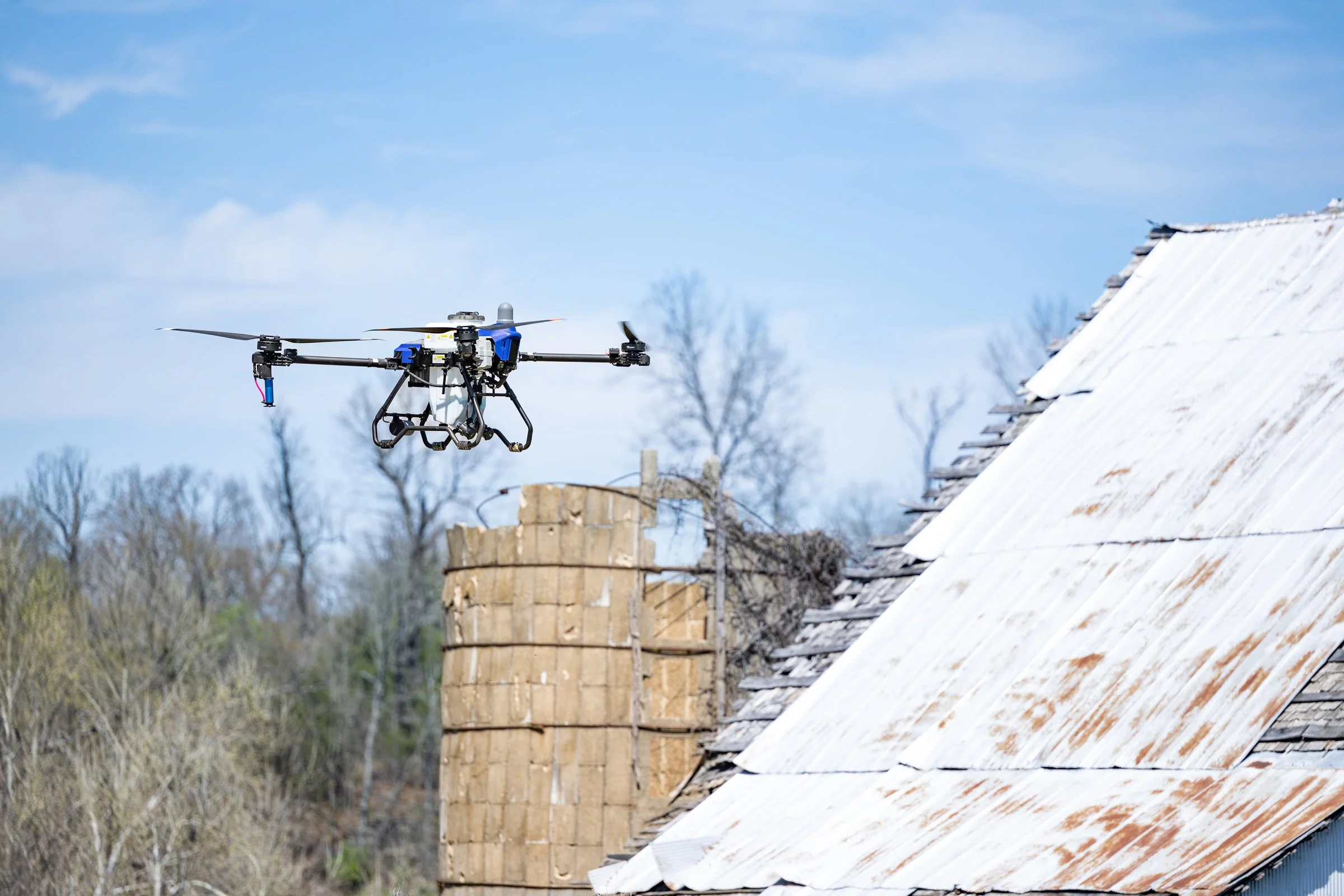
Field #3 – MANUAL+ Mode Testing with Obstacles
Control, Confidence, and Real-World Field Creation
Field #3 shifted gears completely.
This wasn’t about acres.
This wasn’t about speed.
👉 This was about control, confidence, and usability in the real world
We designed this test around a tight, obstacle-heavy field:
downhill flight path
barn blocking signal line
trees and terrain forcing precision flying
total distance 730 feet
The goal was simple:
👉 How well can each drone:
fly manually
maintain connection
trim around obstacles
and turn that flight into a usable field map
Standardized Flight Parameters
Altitude: 10 ft
Speed: 16 ft/sec
Swath: 20 ft
Rate: 3 GPA
Droplet Size: 410 micron
Mix: Water
(FIELD 3) Manual+ Field Videos (Left to right: T50, T60X, J70)
Manual+ Observations
Control & Flight Feel
The T50 and T60X flew very similarly. Both platforms:
responded well to stick input
allowed tight trimming around obstacles
worked effectively with radar for proximity flying
👉 You could “make the radar sing” around trees and terrain.
The J70 struggled here:
Latency in the FPV feed made it difficult to judge position
Confidence flying near obstacles was reduced
Completing the assignment required more effort
👉 Manual flight is not where the J70 currently shines
Connectivity & FPV Feed
T50 & T60X → strong, real-time, reliable feed
J70 → improved image quality, but still noticeable latency
The updated non-fisheye lens on the J70 is a big step forward visually, but:
👉 Latency still impacts real-world usability in manual flight
Terrain Interaction
Terrain played a major role in this test.
On the steep sections:
T50 & T60X both dropped altitude noticeably
pilots relied heavily on radar to maintain safe operation
The J70 did not fully complete the same terrain-following workflow in this test, making direct comparison limited.
Mapping Workflow (Big Differentiator)
This is where the T60X separates itself.
T60X → automatically converts flown path into a field boundary
T50 → requires manual placement of boundary points after flight
J70 → capable, but less efficient and harder to execute due to control limitations
👉 This matters more than it sounds
In real-world operations:
faster mapping = faster turnaround
less admin time = more flying time
👉 T60X wins on workflow efficiency
Flight Time & Endurance
Not the focus of this test—but still worth noting:
👉 The T60X would stay in the air longer in this type of operation
For larger or more complex manual fields, that becomes a real advantage.
Manual+ Rankings (Based on This Test)
Best overall manual control: T50 / T60X (tie)
Best FPV & connectivity: T50 / T60X
Best mapping workflow: T60X
Most challenging in manual flight: J70
Who This Field Favored
Favored: Control, low-latency FPV, and efficient mapping workflow
Winner profile: Operators working tight fields, obstacles, and manual boundary-heavy jobs
Final thoughts
Final thoughts ACROSS ALL THREE FIELDS
Now that we’ve run all three scenarios, a pattern is clear:
Each drone wins in a different category
T50 → efficiency, route planning, and overall execution in complex fields
T60X → power, payload, and high-speed productivity
J70 → spray consistency and safety-focused features
What This Means for Operators
There is no one-size-fits-all answer.
👉 The “best” drone depends entirely on your operation:
Pasture / irregular terrain?
→ Efficiency and smart flight paths matter most (T50 advantage)Large crop acres / long runs?
→ Power + payload wins (T60X advantage)Focused on droplet quality & terrain-aware safety?
→ Worth looking at (J70)
At the end of the day, this demo wasn’t about crowning a winner. It was about answering a much more important question: What actually works best for your operation?
After putting all three drones through pasture ground, crop-style runs, and manual flight scenarios, one thing became very clear. There is no perfect drone—only the right tool for the job.
What We Learned
The T50 proved that efficiency and smart software can outperform raw size—especially in tight, irregular fields where every decision matters. The T60X showed what happens when you combine power, payload, and speed—making it a serious contender for operators focused on covering acres quickly and consistently. The J70 highlighted strengths in spray consistency and safety-focused features, while also showing where improvements in efficiency and real-time control will make a difference moving forward.
When you stretch these differences across:
a full spray season
hundreds (or thousands) of acres
tight weather windows
…they’re no longer small differences.
They become:
👉 more acres per day
👉 fewer battery swaps and refills
👉 less time mapping and reworking fields
👉 and ultimately—more profitability
For us here in Southern Missouri, this demo reinforced something we’ve been seeing more and more. Mid-sized drones are the sweet spot for the majority of operations as they are easier to transport, easier to handle, and more adaptable to the terrain and field sizes we actually work in
And when matched correctly to the right type of work, they can be incredibly efficient.
If you take one thing away from this:
👉 Don’t choose a drone based on specs alone—choose it based on your ground.
Your field shapes
Your terrain
Your average acres per job
Your workflow
Because the best drone on paper doesn’t always win in the field.
We can talk specs all day—but nothing replaces seeing it in action. If you’re serious about adding a drone to your operation, or upgrading what you’re currently running, come fly with us and see the differences firsthand. Let’s match you with the right tool for your operation.
To the manufactures and partners of these aircraft we thank you for your work on this technology, and most importantly for not giving up on the mid sized drone market! As always we will continue to do more testing in various scenarios, as well as retest drones when updates roll out. We learned again that bigger is not always everything, and knowing your field size, type, and use cases will steer you in the right direction. Remember, there is no best drone. There is a right drone for the right job at the right price point. Weigh your budget and use case.
We say this in nearly every demo we do, but it is one of the most important pieces. We stand by the idea that a decision will likely come down to how the consumer feels each manufacturer will perform in after sales service, parts availability, and governmental affairs along with pricing and availability in the United States.
Thank You
A big thank-you to everyone who joined us in the field and helped make the day a success. From our excellent insurance partners at VT Insurance who made lunch possible to the AgriSpray crew for coming down and letting us play with the new J70. Another great and informational day in the field!
Stay tuned by joining our email list or Facebook page and blog for the latest info, tests, and upcoming demonstration schedule.